
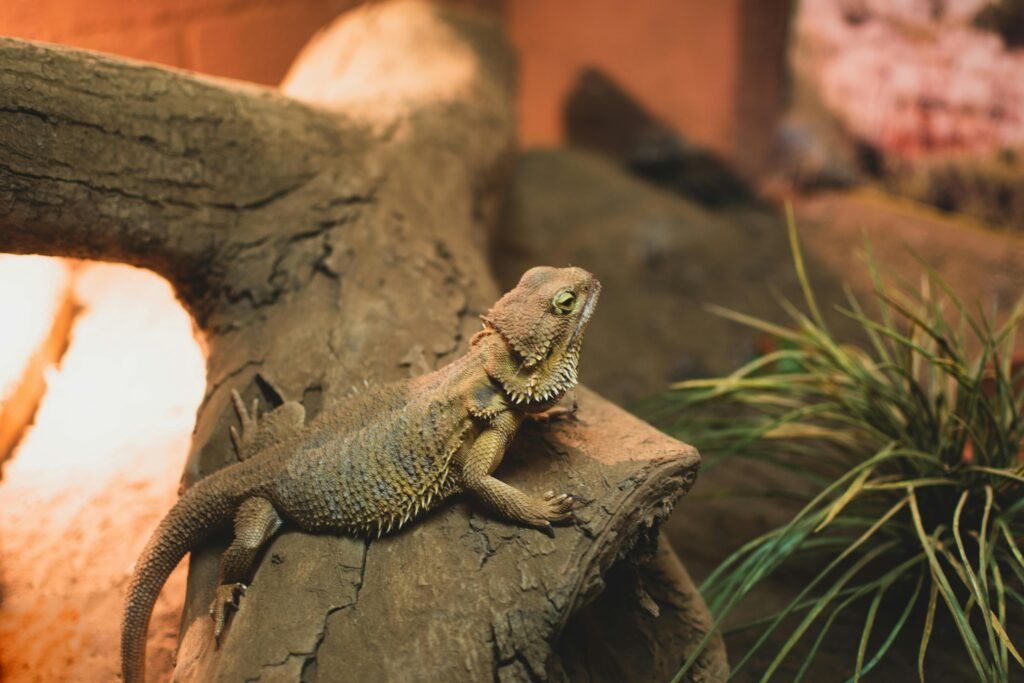
Setting up a bearded dragon enclosure is straightforward when you focus on the essentials: correct tank size, reliable heat and UVB lighting, and safe substrate. Get those three right and you’ll give your bearded dragon the temperature, light, and space it needs to stay healthy and active.
You’ll also learn how to arrange hides, climbing spots, and feeding areas to create a comfortable, stimulating habitat that mirrors natural behavior. Follow practical, step-by-step guidance on choosing equipment and arranging the enclosure so your pet thrives.
Essential Requirements for a Bearded Dragon Enclosure
Selecting the Right Enclosure Size and Type
Choose at minimum a 40-gallon breeder tank (36″ x 18″ x 18″) for juveniles and a 75–120 gallon tank (48″–72″ long) for adults; larger is better for activity and thermoregulation. Glass aquariums work well for visibility and humidity control, while custom wooden or PVC cages offer better insulation and mounting options for fixtures. Well build DIY enclosure are also a great cheap alternative.
No matter what material you choose, be sure there is plenty of ventilation. Allow for a sturdy location to place lights and heating sources. Also, check to see if all areas of the enclosure are secure to prevent escapes.


Optimal Heating and Lighting Setup
Heating
Create a basking spot of 95–110°F (35–43°C) for adults; juveniles need slightly higher basking temps (100–110°F). The warm end should stay between 90–100°F (32–38°C). Maintain a cool side of 75–85°F (24–29°C) and a nighttime drop to 65–75°F (18–24°C). Use a ceramic heat emitter or basking bulb for daytime heat and, if needed, a low-wattage heat source for nights.
Light/UVB
Bearded Dragons need full-spectrum light as well as specialized UVB bulbs to mimic natural sunlight keep health issues from arising. Install a full-spectrum UVB lamp that emits 10–12% UVB (or a T5 HO tube rated for reptiles) placed 10–12 inches from the basking spot or per manufacturer guidance. Replace fluorescent UVB every 6–12 months and replace bulbs sooner if the output declines. Position lights on a timer to provide a 12–14 hour day/night cycle.


Safe and Suitable Substrates
For beginner keepers it is best to avoid lose substrates that could give your beardie impaction. Substrates like ceramic tile or non-adhesive shelf liner are good for easy cleaning and minimal ingestion risk. If using tile/stone make sure there are no cracks or seams that your lizards foot could get stuck in. These substrates allow proper traction and are safe for young and adult dragons. However, overtime hard substrates can take a tole on their body so it is good to upgrade to a more naturalistic substrate (like soil mixes or cypress mulch) as your get more experienced.
For occasional digging or enrichment, offer a “dig bin” filled with a safe substrate (e.g., soil mixed with play sand and non-toxic compost) separate from the other substrate. Clean or replace substrate regularly and spot-clean daily to reduce bacterial growth and parasites.
Effective Temperature and Humidity Control
Monitor temperatures with at least two reliable digital thermometers or thermostat probes: one at the basking surface and one on the cool side. Use a thermostat to regulate heat emitters and prevent hot spots; mercury or simple dial thermostats can fail, so opt for digital models with probes. A heat gun is another useful tool to spot check temperatures within the cage.
Keep humidity between 30–40% to avoid respiratory issues and retain proper shedding. Measure humidity with a digital hygrometer placed away from direct heat. Increase humidity briefly during shedding with short misting or a moist hide lined with damp paper towels or sphagnum moss, but avoid sustained high humidity.

- 【Home Hygrometer Thermometer】Mini digital thermometer humidity meter can help you quickly know…
- 【Fahrenheit/Celsius】 The Thermometer Humidity Monitor can achieve the mutual conversion between…
- 【Fast Response】This mini hygrometer are built in sensitive sensor, readings are automatically…

Creating a Comfortable and Enriching Habitat
Choosing Appropriate Hides and Climbing Structures
Offer at least three hides: one on the warm side, one on the cool side, and one in the middle. Warm-side hide should sit under the basking light and allow your dragon to thermoregulate quickly. Cool-side hide gives a cooler retreat and should not receive direct heat. The middle hide should be somewhere in between giving your beardie a medium temperature zone.
Select climbing structures that support the dragon’s weight and have textured surfaces for grip. Use solid, flat-topped rocks or broad branches rather than thin perches that can twist or break. Hammocks make perfect basking spots and are a popular choice among bearded dragon owners. Be sure to anchor decor so nothing can tip when your dragon climbs.
Avoid loose or breakable materials like untreated driftwood, thin glass shelves, or small gravel that can splinter or be swallowed. Aim for multiple levels reachable within the enclosure height so your dragon can choose basking heights without risking falls.

- Abundant Tank Accessories Set:Package comes with 9 pieces,1x Bearded dragon hammock; ,1x…
- DIY Habitat Decor for Your Reptile: Terrarium plants add richness to the decoration of the crawling…
- Safe Material & Durable:Reptile plants are made from intentionally non-toxic plastic and the stems…
Providing Access to Water and Food
Provide water in a shallow, heavy dish that your dragon can’t tip; replace water daily and clean the dish weekly. Adult bearded dragons often get most hydration from food and occasional soaking, but always offer fresh water.
Create a feeding station with a shallow plate for vegetables and a separate area for live insects. Dust insects with calcium powder (without D3 at every feeding) according to age: juveniles daily, adults 2–3 times weekly. Use a separate catch tray or feeding bowl to reduce substrate ingestion during feeding.
Offer vegetables finely chopped or in salad form and remove uneaten food within 12–24 hours to prevent spoilage. Rotate leafy greens and safe vegetables to provide varied nutrients.
Incorporating Safe Plants and Decor
For bioactive enclosures, choose non-toxic, sturdy live plants such as pothos (trained away from soil), spider plant, or small succulents secured in shallow pots. Seal plant soil with a mesh or place plants behind barriers to prevent digging.
For non-bioactive enclosure, use artificial plants made from reptile-safe materials. Fill the space with fake plants, logs, and climbing structures to give your beardie enrichment and thing to explore. Check decor and don’t use items with sharp and jagged edges.
Avoid sand, small pebble substrates, and plants treated with pesticides. Anchor large decor items to the enclosure base and periodically inspect for wear, loose parts, or mold buildup.
As an Amazon Associate I earn from qualifying purchases.